Relocating to Vail AZ From Tucson: What to Know
June 18, 2026
June 18, 2026
Thinking about trading Tucson’s faster pace for a little more space in Vail? You are not alone. Many buyers look southeast for newer homes, roomier lots, and a lifestyle that still keeps them connected to the Tucson job market. This guide will walk you through what changes, what stays convenient, and how to plan your move with fewer surprises. Let’s dive in.
Vail offers a different rhythm than central Tucson. It sits in the southeast suburban part of Pima County, where the metro edge starts to open into more desert space and a more suburban-rural feel. If you want a home base that feels less crowded without cutting ties to Tucson, Vail often lands on the shortlist.
It is also a strongly owner-occupied area. Census data shows a 91.1% owner-occupied housing rate, which helps explain why many people see Vail as a place to put down roots. The 2020 population was 13,604 across 22.68 square miles, so the overall feel is smaller and more spread out than many parts of Tucson.
For households comparing lifestyles, Vail can feel like a practical middle ground. You still have access to metro Tucson, but daily life often includes more driving, more subdivision living, and easier access to open desert landscapes.
If you move from Tucson to Vail, one of the first things you may notice is the extra breathing room. Neighborhoods often include amenities like parks, walking paths, playgrounds, dog parks, trails, pickleball, basketball, and splash pads, depending on the community. That can make everyday life feel more residential and less urban.
Vail also leans into outdoor access. Colossal Cave Mountain Park spans 2,400 acres and includes desert, grassland, dry cave, and riparian habitats. The Arizona National Scenic Trail crosses the park, which adds to the area’s outdoors-oriented character.
Cienega Creek Natural Preserve is another nearby natural area, covering more than 4,000 acres about 25 miles southeast of downtown Tucson. Public recreation there is limited by permit, but it still helps shape the region’s identity. In simple terms, Vail feels closer to open space and desert scenery than many central Tucson neighborhoods.
The commute is one of the biggest tradeoffs to think through before you move. Vail sits about 24 to 25 miles southeast of downtown Tucson, and Census data shows a mean travel time to work of 29.7 minutes. For many buyers, that is manageable, but it is still a real shift if you are used to shorter in-town drives.
Vail remains tied to major Tucson-area employment centers. Communities in the area are often marketed as convenient to I-10 and job hubs such as Raytheon, UA Tech Park, and the Target Distribution Center. That means you can gain space without fully stepping away from the broader Tucson economy.
The key is being honest about your routine. If you commute daily, run frequent errands, or have activities spread across Tucson, the extra drive time matters. If your priority is more house, newer construction, or a quieter setting, that tradeoff may feel worth it.
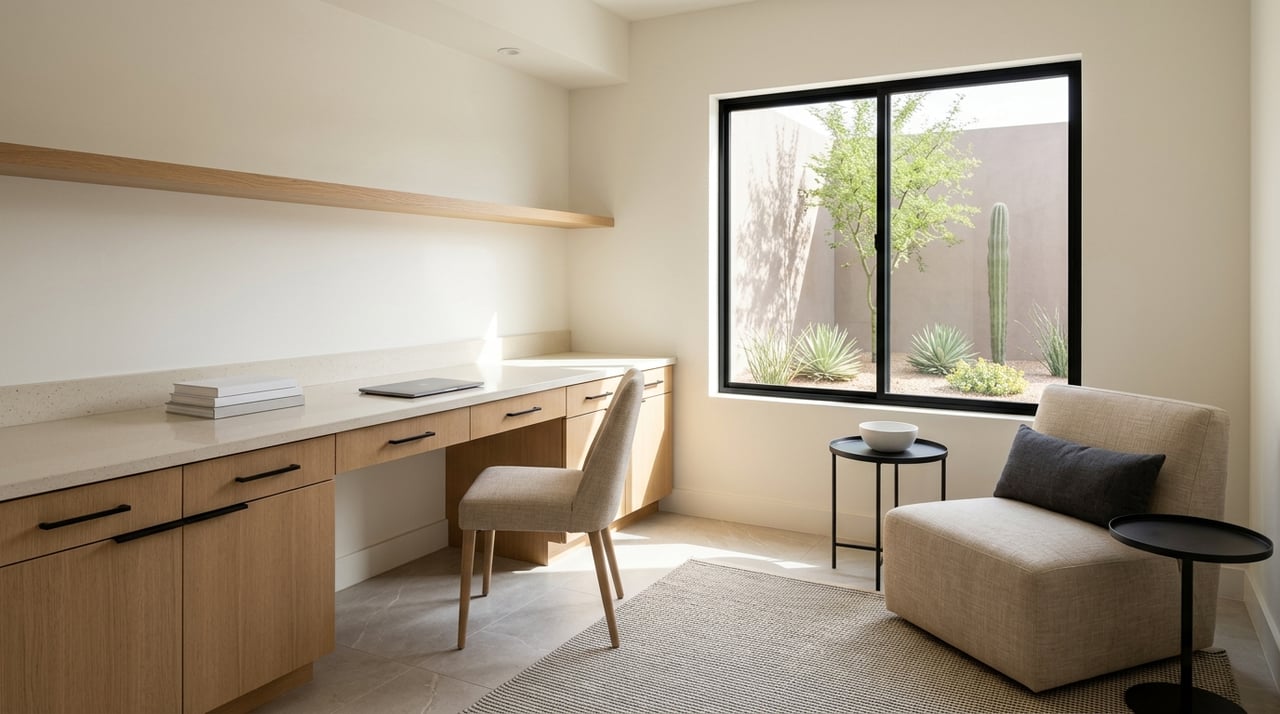
Much of Vail’s current housing choice leans toward single-family homes. New-construction communities feature one- and two-story floor plans, open layouts, and neighborhood amenities that appeal to buyers who want a modern setup. If you are coming from an older Tucson home, the newer inventory can be a major draw.
Current new-build examples show a wide range of price points and floor plans. KB Home’s The Landings at Rancho Del Lago starts from $298,990, with plans from about 1,126 to 1,998 square feet. Meritage’s Alamar at Rocking K starts from $344,000, with floor plans from about 1,578 to 2,575 square feet.
Lennar’s Santa Rita Ranch is currently from the high $300,000s, with available homes around $432,990 to $472,990 and plans from about 1,477 to 2,629 square feet. Some layouts include multigenerational options, which may matter if you need flexible living space. These examples show that Vail can work for first-time buyers, move-up buyers, and households that want more room to grow.
One of the most practical differences between Tucson and Vail is lot flexibility. Some buyers assume Vail only means tract homes, but current listings show a much broader range. You can find homes on standard subdivision lots, larger custom-home sites, and even acreage properties.
Recent examples include a new-build lot around 4,800 square feet, an established home on a 6,534-square-foot lot, a current listing on 1 acre, and a custom property on 45.49 acres. That range matters because it gives you more than one version of Vail to choose from.
If you want lower-maintenance suburban living, you can find it. If you want elbow room, space for a workshop, or a more rural feel, that may be possible too. This is one reason relocating buyers often benefit from narrowing their lifestyle goals before they start touring homes.
Vail is not the same market it was a few years ago, and buyers should go in with realistic expectations. Zillow’s current snapshot shows typical home values around $407,796, a median sale price of $400,167, and a median list price of $423,317. Homes are going pending in about 29 days.
That timing suggests you may still need to act promptly when the right home appears. It does not necessarily point to an extreme frenzy, but it does mean waiting too long can cost you options. If you are relocating from Tucson and juggling a sale or lease timeline, preparation matters.
Census data also shows a median selected monthly owner cost with a mortgage of $1,979. That number can help as a broad area benchmark, but it is not a substitute for your actual payment estimate. Your monthly cost will depend on price, financing, taxes, insurance, and any HOA dues.
For many Tucson movers, the first big decision is whether to buy resale or new construction. Vail gives you both paths, and each one can make sense depending on your timeline and goals. The right choice often comes down to speed, customization, and budget discipline.
A resale home may offer a faster closing, established landscaping, and a more immediate picture of the neighborhood. It may also give you access to home types that are less common in newer subdivisions, including manufactured homes on 1-acre lots or custom-style homes on larger parcels.
New construction can be appealing if you want updated floor plans and less immediate maintenance. Meritage advertises move-in-ready closings in 60 days or less at Alamar at Rocking K, while KB Home says personalized homes at The Landings at Rancho Del Lago can be delivered in about four months. That range is useful if you need to line up your move carefully.
The base price of a home is only part of the story. If you are comparing Vail to Tucson, make sure you look beyond the sticker price and think about your full monthly and upfront costs. This is especially important if you are considering a builder community.
Your budget may need to account for:
That full-picture approach can help you avoid a common relocation mistake, which is falling in love with a floor plan before checking the total cost. A practical budget gives you more confidence when it is time to make an offer or sign a builder contract.
A move from Tucson to Vail may look local on a map, but it can still involve a lot of moving parts. You may be selling one home, buying another, timing a lease end, or deciding between a resale timeline and a builder timeline. The earlier you organize those pieces, the smoother the process tends to feel.
If you are preparing to buy, start by reviewing your finances early. Consumer guidance in the research notes that buyers should review credit in advance, get preapproved when ready to shop, and remember that a preapproval is not a final loan commitment. It also notes that preapproval letters often expire in 30 to 60 days.
The same guidance recommends avoiding new debt or large purchases before buying. It also supports making offers contingent on financing and a satisfactory inspection. Those steps matter even more when your move includes multiple transactions at once.
A simple planning path can look like this:
For some buyers, school logistics are part of the relocation checklist. The Vail Unified School District says it serves 22 schools and more than 15,000 students across southeastern Tucson, Corona de Tucson, and the Vail area. If this matters to your move, it is helpful to confirm school attendance details early as you narrow your search.
More broadly, it helps to remember that Vail is a census-designated place rather than an incorporated city. In everyday terms, that means your search may include a mix of community identities, subdivision styles, and levels of rural character across the area. Looking at the map closely can save you time and help you choose a location that fits your routine.
Vail often makes sense if you want more space, newer housing options, and a home environment that feels more open than central Tucson. It can also be a strong fit if you are comfortable with car-based errands and a somewhat longer commute in exchange for that extra room.
The tradeoff is that planning matters more. You may need to think carefully about commute time, total budget, and whether you want a quick move-in home or a more customized build. When you go in with a clear plan, Vail can offer a very practical next step for your move.
If you are weighing Vail against other Tucson-area options, the best next move is to compare neighborhoods, lot types, and timelines side by side. When you understand how you want to live, the right part of Vail becomes much easier to spot.
If you are thinking about relocating to Vail from Tucson, I am Home Arizona Group can help you compare your options, understand the local market, and build a plan that fits your timeline.
Stay up to date on the latest real estate trends.
Partner with a trusted real estate team that blends market knowledge, integrity, and a client-focused mindset—collaborating closely to navigate every stage of the journey with clear communication, careful attention to detail, and a dedication to achieving outstanding results.