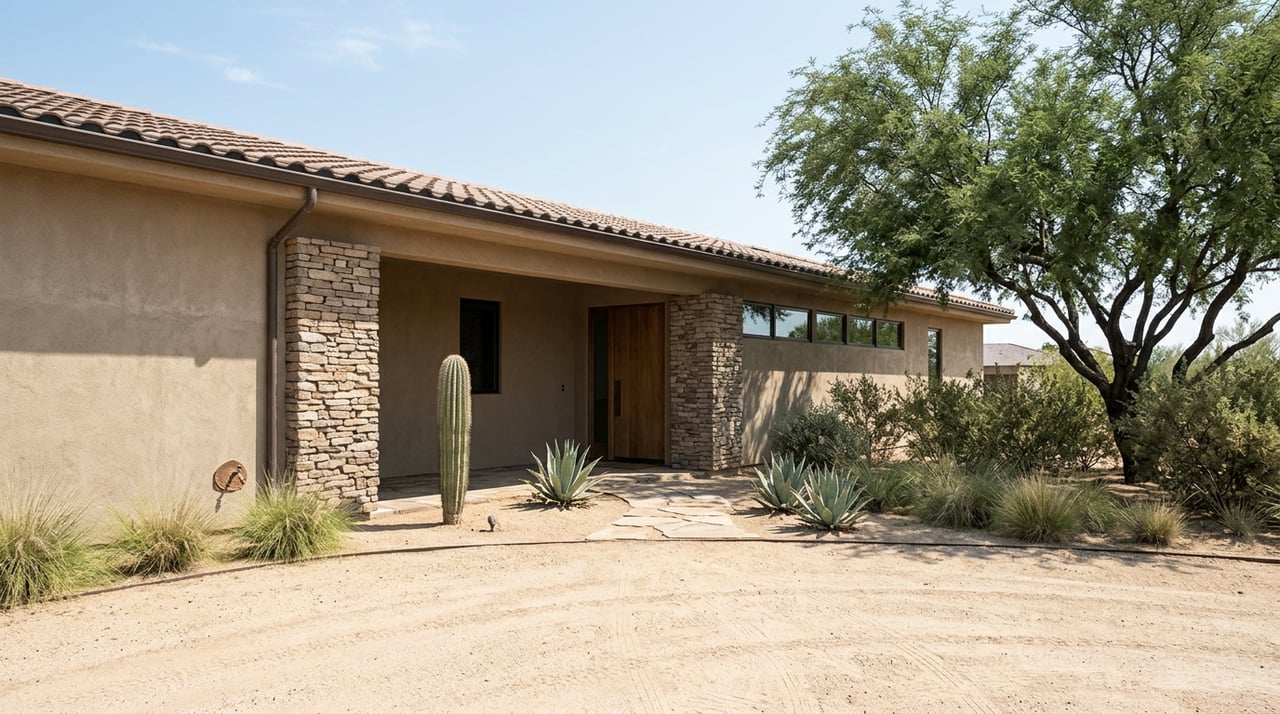
In Vail, the Median Price Is Averaging Two Different Housing Markets
September 17, 2026
September 17, 2026
Tour a model home at Covena Pointe on a Saturday morning and a sales associate will hand you a sheet with a builder-subsidized rate, a closing-cost credit, and a move-in date measured in weeks. Drive fifteen minutes to a resale listing on an acre lot near Colossal Cave Road and you'll find a seller who has already dropped the price once, watched the showings slow down, and is now waiting on an offer that hasn't come in three and a half months. Both houses are in Vail, Arizona. Both show up in the same median price calculation. They are not competing in the same market, and treating them like they are is the single most common mistake a Vail-bound buyer makes before they've written an offer.
That gap between two prices sharing one zip code is the story underneath this fall's Vail numbers, and it's worth understanding before you decide which version of Vail you're actually comparing to Marana, Oro Valley, or the rest of your shortlist.
As of the most recent update in early August 2026, Vail's average home value sat between roughly $407,000 and $413,000 depending on the index, down about 2.2 to 2.3 percent from a year earlier. On its own, that reads like a market that's cooling across the board. It isn't. It's two markets moving at different speeds and getting blended into one soft-looking average.
Look at how long homes actually take to sell. Zillow's pending data puts the typical Vail home going under contract in roughly 39 to 54 days. But days-on-market figures for July 2026 show a very different number: 109 days, up from 84 days the year before, even as the number of homes that sold in Vail that month climbed to 609 from 541 a year earlier. Sales volume went up. The time it takes an individual home to sell also went up. That combination only makes sense if a big share of that July volume came from homes that moved fast, dragging the sales count higher, while a separate share of the market sat for months, dragging the average time-on-market up too. Split it and the story stops being a contradiction. New construction is the fast half. Resale is the slow half. The median just doesn't know how to tell you which one you're looking at.
The fast half exists because of what's happening inside Rocking K, the roughly 5,000-acre master-planned community about 25 miles southeast of downtown Tucson that now has more builders operating inside it than most Tucson-area developments have had in a decade. D.R. Horton's Oasis at Rocking K got there first and has sold down to its last homesites. Mattamy Homes followed with Covena Pointe, a 174-homesite neighborhood built exclusively as single-story homes so more residents keep their view of the Rincon Mountains, and then opened a second neighborhood, Alamar, with 38 homesites, as the company announced in August 2026. Lennar is building its own separate master-planned community nearby at Sycamore Canyon. Pulte's Vail Parke and Richmond American's Sky Village have already sold out entirely.
That's not a coincidence of timing. It's builders competing for the same buyer pool inside the same few square miles, and the tool they're using to win isn't a lower price on paper. It's a rate buydown or a closing-cost credit that lowers the monthly payment without touching the base price the builder reports to the county. A resale seller down the road can cut their list price, but they can't manufacture a builder-grade financing incentive out of their own equity the way a national homebuilder can out of its balance sheet. That's the actual mechanism behind the gap. It isn't that new homes are simply nicer. It's that the seller of a new home has a subsidy tool a resale seller structurally does not have access to, and that tool is what's compressing the new-construction side of Vail's numbers while the resale side drifts.
The other piece of the new-construction pitch is infrastructure that didn't exist in Vail a decade ago and mostly doesn't exist on the resale side either. Rocking K's Diamond Community Park covers 19 acres and includes sports courts, a zip line, and a splash pad designed around Arizona's mountain ranges and waterways. The community holds a weekly Saturday farmers market and has a dark-sky designation that supports organized stargazing nights throughout the year. Saguaro Creek K-8, which opened in July 2025 inside the Vail Unified School District, sits an eight-minute walk from Alamar.
None of that is free. It's built into the HOA structure and, indirectly, into the price of every new home in the community. A resale buyer on an acre lot near Cienega Creek is paying for land, privacy, and often a shorter commute to Del Lago Golf Club or the shops at Houghton Town Center, but they are not paying an HOA fee that funds a splash pad and a zip line. Comparing the sticker price of a Rocking K home to a resale listing without accounting for what each one bundles in is the second way that single median number misleads a shopper who hasn't walked both sides of Vail yet.
If you're timing a purchase around waiting for supply to loosen up, there's a bigger number worth knowing than anything currently on the market. Pima County has approved Vail Crossings, a 609-acre mixed residential and commercial project along Success Drive and the Interstate 10 frontage road in southeast Pima County. The plan calls for 1,180 single-family units on top of commercial space, an $87 million buildout, with construction slated to begin this year according to Tucson Sentinel's reporting on a January memorandum from Pima County Administrator Jan Lesher. The project will also require the developer to pay in-lieu mitigation fees for disturbing regulated riparian habitat, roughly 3.34 acres on the residential side and 15.3 acres on the commercial side.
That's a separate pipeline from Rocking K, and it's not open for tours yet. But it tells you the fast-moving side of Vail's market isn't a temporary blip that resolves itself in a year. There's another 1,180 units of new-construction competition already approved and headed toward groundbreaking, which means the builder-versus-resale gap this fall is closer to the early chapters of a longer story than a one-season anomaly.
If you're comparing new-construction offers, the number that matters is not the advertised rate. It's the total cost across the incentive package: the rate buydown, the closing-cost credit, and what the builder is charging at the design center for anything you'd want anyway. Two builders can advertise a similar payment and land tens of thousands of dollars apart once you run the actual numbers side by side, and that comparison is worth doing before you sign anything, not after.
If you're shopping resale, the 109-day average isn't a warning sign about the house. It's a data point about your leverage. A resale seller in today's Vail can't out-subsidize a builder's financing desk, which means price and terms are the two levers actually available to them, and a buyer who understands that walks into a negotiation with a clearer sense of what's realistic to ask for.
Does a builder's rate buydown always beat a lower-priced resale home? Not automatically. It depends on how long you plan to stay in the home and whether the buydown is temporary or permanent. A temporary buydown that steps back up to full rate in year two or three needs to be budgeted against the higher payment you'll eventually carry, not just the lower one you start with.
Will construction beginning at Vail Crossings move prices right away? Groundbreaking and the arrival of finished, marketable inventory are two different events separated by months of site work. The more immediate effect on today's market is the ongoing pace of sales inside Rocking K and Sycamore Canyon, not a project still in its early construction phase.
Vail isn't one market pretending to be two. It's two markets that happen to share a zip code, a school district, and one misleading median. Knowing which one you're actually shopping, and what each side can and can't offer you, is the difference between a search that takes a weekend and one that takes a season.
If you want a second set of eyes on which side of Vail actually fits your budget and your timeline, I Am Home Arizona is glad to walk through both with you and run the real numbers before you write an offer.
Stay up to date on the latest real estate trends.
Partner with a trusted real estate team that blends market knowledge, integrity, and a client-focused mindset—collaborating closely to navigate every stage of the journey with clear communication, careful attention to detail, and a dedication to achieving outstanding results.