Scottsdale vs Phoenix Living: Which Lifestyle Fits Best?
May 14, 2026
May 14, 2026
Trying to choose between Scottsdale and Phoenix? You are not alone. Many Arizona buyers and sellers compare these two cities because they sit close together but offer very different day-to-day experiences. If you want a clearer picture of how lifestyle, housing, commuting, and recreation compare, this guide will help you sort through the differences and decide what may fit you best. Let’s dive in.
Scottsdale and Phoenix share the same metro area, but they feel very different once you spend time in each place. Scottsdale has 243,050 residents and covers 184.5 square miles, while Phoenix has more than 1.6 million residents and spans 518 square miles. That gap in size shapes almost everything about how each city lives.
Scottsdale often feels more concentrated and destination-oriented. The city highlights Old Town as its downtown core and the McDowell Sonoran Preserve as a defining part of local life. Phoenix feels broader and more layered, with a mix of downtown districts, historic areas, mountain preserves, and transit-oriented corridors spread across a much larger footprint.
If you want a city that feels more cohesive and easier to summarize, Scottsdale may stand out. If you like the idea of a larger city with many distinct pockets and a wider range of urban experiences, Phoenix may feel like a better fit.
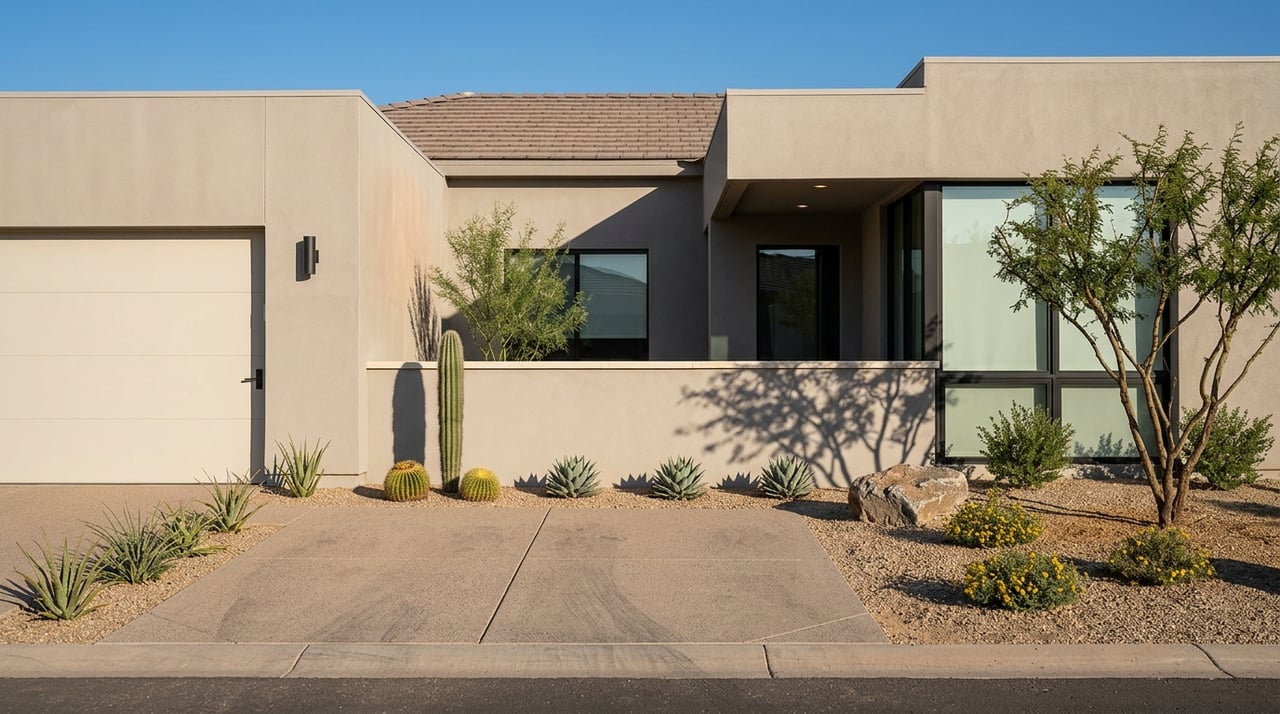
Scottsdale uses character-based planning, which helps give many areas a more unified feel. The city’s planning framework includes citywide, character-area, and neighborhood planning, and that often supports a polished residential environment. In many parts of Scottsdale, you will notice neighborhoods that feel intentionally shaped and consistently maintained.
That does not mean every part of Scottsdale looks the same. Southern Scottsdale includes many of the city’s older neighborhoods and is known for primarily single-family detached ranch-style homes. The Cactus Corridor includes suburban subdivisions along with equestrian and lifestyle-oriented uses, while Old Town Scottsdale is the denser urban core.
For many buyers, Scottsdale feels more suburban, preserve-oriented, and structured. If you prefer neighborhoods with a cohesive identity and lower-density surroundings, that can be a major advantage.
Phoenix offers more variety by design. Different areas have noticeably different housing styles and street character, from postwar ranch homes in Alhambra to mid-century ranch homes in Arcadia to designated residential historic districts in central Phoenix. Neighborhoods like Downtown Phoenix, Roosevelt Row, Melrose, and Biltmore add even more range in style and atmosphere.
That variety can be a big plus if you want options. You may find more visible differences from one neighborhood to the next in Phoenix than in Scottsdale. For buyers who enjoy exploring many distinct settings before choosing a home, Phoenix often offers a wider spread.
Price plays a major role in the Scottsdale versus Phoenix conversation. Census QuickFacts lists the median owner-occupied home value at $789,800 in Scottsdale and $420,700 in Phoenix. That does not tell you what every neighborhood or home type will cost, but it gives useful citywide context.
In simple terms, Scottsdale tends to come with a more premium price point. Phoenix may offer more price variety across its many neighborhoods. If budget flexibility is important to you, Phoenix may provide more room to compare options across different areas and housing styles.
Scottsdale’s average travel time to work is 21.6 minutes, according to Census QuickFacts. The city’s mobility system is centered on roads, bus routes, trolley service, and biking. Scottsdale lists 11 Valley Metro bus routes, a free Old Town trolley, and a Gold Level Bicycle Friendly Community designation.
For many residents, Scottsdale still feels road-centered. The local transit options are useful, especially around Old Town and key activity areas, but the overall lifestyle tends to favor driving.
Phoenix has a longer average travel time to work at 25.6 minutes. Because the city is much larger, your commute experience can vary a lot depending on where you live and where you work. Cross-city travel patterns are more common in Phoenix simply because there is more ground to cover.
Phoenix also has the stronger transit backbone. The city offers bus service, light rail, Dial-a-Ride, and continued transit expansion through Transportation 2050. If access to rail and a broader transit network matters to you, Phoenix has the edge.
Scottsdale’s dining and nightlife are highly concentrated in Old Town. According to the City of Scottsdale, Old Town has more than 90 restaurants, 320 retail shops, and more than 80 art galleries. That concentration gives the area a lively, easy-to-navigate feel for dining, shopping, and going out.
Scottsdale also stands out for its connection to the desert landscape. The McDowell Sonoran Preserve is a permanently protected desert habitat with non-motorized multi-use trails and multiple trailheads. The city describes it as the largest urban wilderness area in the United States, which says a lot about how strongly outdoor access shapes the Scottsdale lifestyle.
Phoenix spreads its dining and recreation across multiple districts instead of one main hub. Roosevelt Row and Grand Avenue are known for walkable arts settings with independent restaurants and bars. Arcadia is known for neighborhood dining, while Biltmore offers an upscale resort-retail feel.
On the recreation side, Phoenix reports more than 41,000 acres of desert parks and mountain preserves, more than 200 miles of trails, 187 parks, 33 community and recreation centers, 8 golf courses, and 29 pools. South Mountain Park and Preserve alone has more than 100 miles of trails, and the Grand Canalscape adds a 12-mile off-street trail system. If you want a long list of recreation choices spread across a large city, Phoenix delivers that variety.
If walkability is high on your list, the answer depends on what kind of walkable environment you want. In Scottsdale, walkability is most concentrated in Old Town. That area offers a compact mix of restaurants, shops, galleries, and entertainment.
In Phoenix, walkable areas are more spread out across several districts. Roosevelt Row, Grand Avenue, Melrose, downtown, and parts of Arcadia all offer their own version of a walkable lifestyle. If you want one established walkable hub, Scottsdale may appeal to you. If you want several different walkable districts to choose from, Phoenix gives you more options.
Scottsdale is often the better match if you want a polished, more suburban setting with a strong identity built around Old Town, desert access, and a more premium feel. Its neighborhoods often feel more controlled and cohesive, and the city’s preserve-oriented character is a major draw for many buyers.
Phoenix may be the better match if you want a larger city with more architectural variety, more transit options, and more neighborhood personalities to explore. It gives you a broader menu of living styles, from historic areas to urban districts to resort-style pockets.
Neither city is universally better. The real question is what matters most to you in daily life. If you are weighing Scottsdale versus Phoenix and want help narrowing down neighborhoods, pricing, or resale considerations, the team at I am Home Arizona Group is here to guide you with clear, thoughtful support.
Stay up to date on the latest real estate trends.
Partner with a trusted real estate team that blends market knowledge, integrity, and a client-focused mindset—collaborating closely to navigate every stage of the journey with clear communication, careful attention to detail, and a dedication to achieving outstanding results.